
Sometimes Accessibility Looks Like Air Conditioning
In the fall of 2025, Steph Love and I had the opportunity to visit the Girl Scouts of Central Indiana’s Camp Gallahue and Camp Sycamore Valley. Through a capacity-building and infrastructure grant focused on increasing access to camp, the Council engaged KBD to assess the camper and staff experience through the lenses of accessibility and inclusion, ACA accreditation, and enrollment growth. A few weeks ago, we were able to return and see their progress. It was pretty special to see changes enacted as a result of work we had done together and recommendations we had made. In consulting, you often come in, get to know people, the work, and the challenges, offer insight, tools, and strategies, and then you’re off to the next project.
The Changes You Can See, and the Ones You Can’t
Right away, we saw changes, including some super cool ones, like new wheelchair-accessible Polaris ATVs and more subtle improvements we only learned about through stories from the program and property teams.
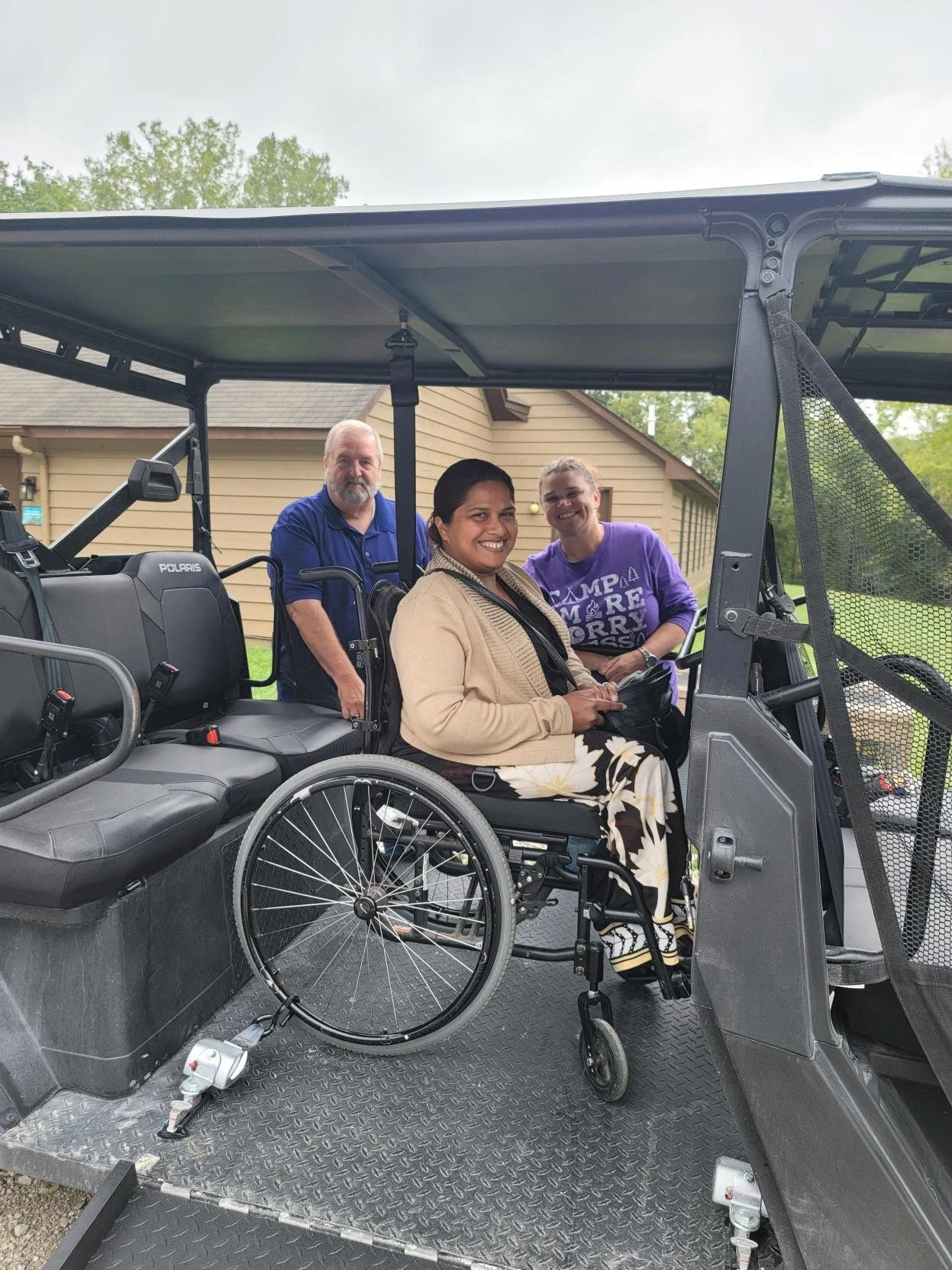
After loading up on the Polaris, we journeyed out to Ardath Unit. At first glance, much of the area looked the same. As we got closer though, we could see newly updated docks and the team shared that Ardath was the first unit house to receive HVAC as part of the improvement efforts. Similarly, the main lodging for staff had a complete renovation inside that included HVAC installation, upgraded bathrooms and showers, and one fully accessible bathroom. The program team also emphasized that ensuring staff could be comfortable, cool off, and get a good night’s sleep meant they could bring more energy and attention to campers. Supporting the people who support young people matters too. Ultimately, happy staff = happy campers!
As we continued our way through camp, we saw the newly upgraded generator that kept a fully-powered lodge and kitchen running during a massive summer storm. While key staff were managing the frantic calls from families and monitoring the weather conditions, campers stayed warm, ate a hot meal, and enjoyed a fabulous sleepover. We learned how Wi-Fi was now available across all key areas of camp. The team shared that there had been some pushback about expanding Wi-Fi because some felt it ran counter to a camp’s goal of helping young people disconnect from their devices. However, from a safety standpoint, Wi-Fi meant staff could communicate with one another throughout camp during an emergency, including being able to call 911 when needed.
For campers who rely on connected medical devices or apps to support their health, such as monitoring glucose levels, Wi-Fi isn’t a luxury. It’s a necessity.
For Camp Sycamore Valley, the biggest improvement was just beginning: a complete renovation of the dining hall. The team already knew the lodge needed significant upgrades, and those improvements became even more important given one of the camp’s biggest accessibility challenges, the large, steeply graded hill. After exploring options for addressing the hill itself without finding a feasible solution, the lodge renovation became an important opportunity to make one of the camp’s central gathering spaces much more accessible and comfortable.
The renovation will include adding HVAC, expanding the kitchen and serving areas to be more accessible, adding an accessible bathroom, and building a better-graded ramp between the first and second stories. Since vehicles and ATVs can reach the lodge, campers and guests who cannot navigate the hill can be transported there and, once they arrive, have a much better experience.
Four Considerations for Engaging in Accessibility Improvements
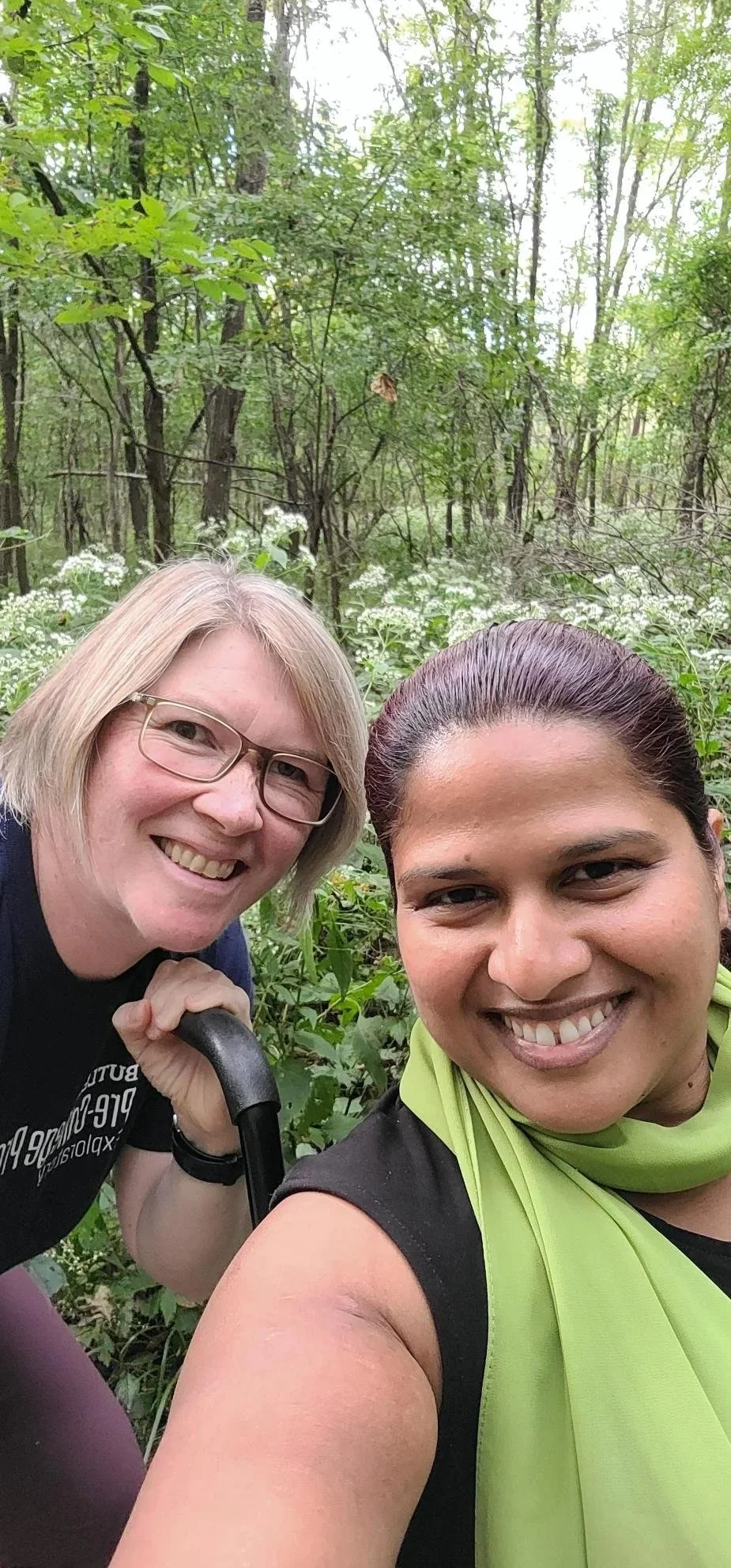
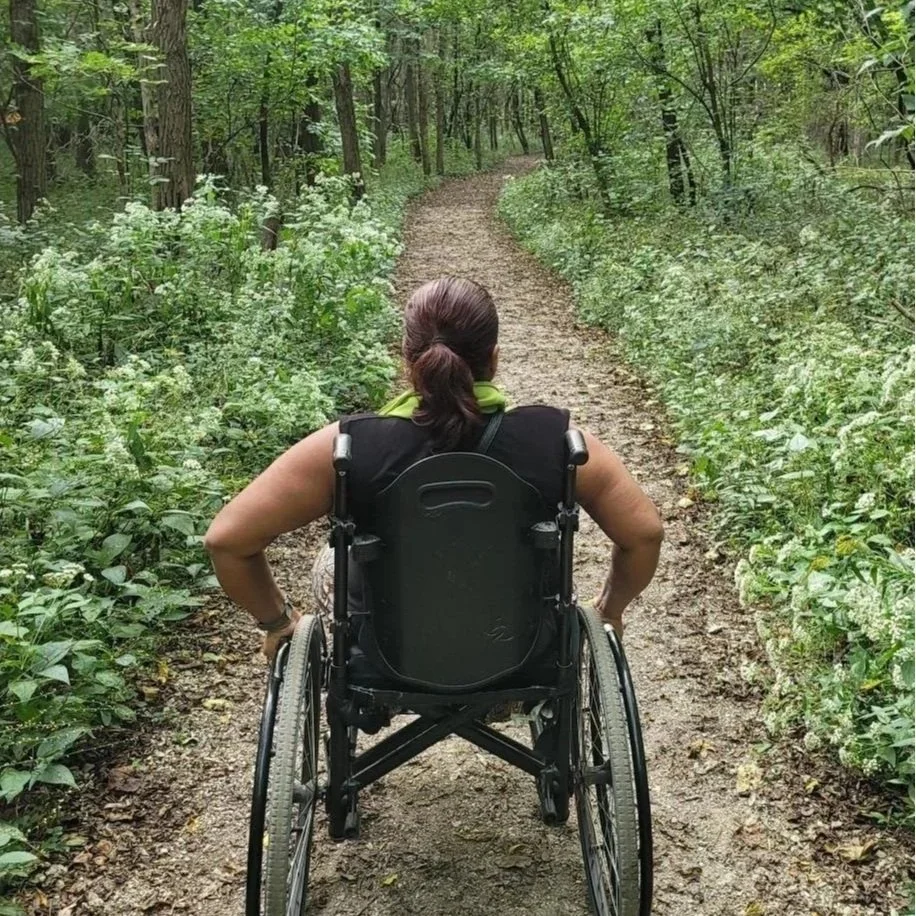
After the tours, Steph and I headed to a nearby park to enjoy a little more of Indiana’s beautiful scenery. As we made our way along the trails, we kept talking about what we had seen. A few ideas kept surfacing about accessibility, improvement, and what it really takes to make camp a place where more people can participate:
1. Comfort can be an access need, not just a nice-to-have.
Being able to cool off, rest, sleep comfortably, or spend time in an air-conditioned space can make the difference between being able to participate and needing to leave. For some campers, this may be a medical necessity. For others, especially those who struggle to regulate or have experienced trauma, having a comfortable place to reset can make it possible to keep engaging in the camp experience. Creating access to the outdoors does not mean everyone has to experience it in exactly the same way.
2. Some of the most important accessibility improvements happen behind the scenes.
Generators and Wi-Fi may not immediately come to mind when we think about accessibility, but both can create the conditions for people to participate safely. Reliable power keeps essential spaces operating during emergencies. Wi-Fi helps staff communicate across a large camp and allows campers who rely on connected medical devices or apps to manage their health. Sometimes access and inclusion depend on infrastructure most people will never even notice.
3. Supporting staff is part of supporting campers.
Accessible and comfortable staff lodging, functional bathrooms, reliable cooling, and other basic supports matter because staff create the day-to-day experiences young people have at camp. When staff can rest, recover, and have their own needs met, they are better positioned to be present, responsive, and engaged with campers.
4. Accessibility is an ongoing practice.
One thing we appreciated throughout our visit was how often the GSCI team celebrated what had changed while also naming what still needed attention. Some improvements require significant capital investment. Others are much smaller: smoothing thresholds, adding ramps, adjusting routes, or simply documenting a needed change so it can be built into a future budget cycle. You do not have to remove every barrier at once to begin creating a more accessible experience. The important thing is to keep noticing, listening, planning, and making progress.
Start Where
You Are
This trip was an inspiring reminder that progress and accessibility aren’t always glamorous or flashy. Some of the most meaningful changes happen quietly in the background and are experienced less as an impressive new feature and more as greater safety, comfort, participation, and belonging.
As you think about your own programs, spaces, or events, look beyond the most visible signs of accessibility. Where might comfort, communication, infrastructure, staff supports, or seemingly small design choices be affecting who can fully participate? You don’t have to tackle everything at once. Start by asking what barriers people are experiencing now, what you could improve relatively easily, and what needs to become part of future plans and budgets.
If you want more guidance or support, we’d love to help. KBD works alongside organizations to listen to participants and staff, examine their full experiences, identify barriers and opportunities, and develop practical priorities for creating more accessible and inclusive programs. Contact us here!